Enterprise interest in autonomous AI agents has skyrocketed over the past year. Yet, engineering teams frequently hit a wall when transitioning from an impressive prototype to mission-critical production: unpredictable latency, state drift, and compounding hallucinations.
In this article, we break down the engineering principles behind reliable, production-grade agent workflows.
The Core Challenge: Compounding Probability of Failure
In a single LLM prompt with a 95% success rate, the system works reliably. However, when you construct an autonomous workflow of 5 interconnected agent decisions:
$$0.95^5 \approx 77%$$
Over a quarter of your multi-agent pipelines will fail or produce erratic outputs unless guarded by deterministic boundary checks.
Key Tenets of Resilient AI Architecture
1. Grounded Structured Context
Never rely on free-form prompt steering for state manipulation. Use typed schemas (like Zod or Pydantic) to enforce structured inputs and outputs between agents. If an agent outputs invalid JSON or missing fields, immediate automatic retries with targeted error feedback should catch the issue before it propagates.
2. Anti-Hallucination Verification Layers
Before any high-stakes action is triggered (such as committing database changes, dispatching an email, or financial calculation), the proposal must pass through a strict verification gate.
In our work on Verifit, we implemented grounded content graph validation to verify claims directly against source data, eliminating generative drift before runtime decisions are made.
3. Separation of Planning and Execution
Split your agents into dedicated roles:
- Strategist / Planner: Evaluates objectives and drafts an execution DAG (Directed Acyclic Graph).
- Tool Specialist: Executes single, bounded API calls.
- Auditor / Evaluator: Verifies that results meet the acceptance criteria before closing the loop.
Conclusion
Building with AI agents requires treating non-deterministic models like untrusted external network calls: wrap them with rigorous circuit breakers, schema validations, and deterministic rollback routines.
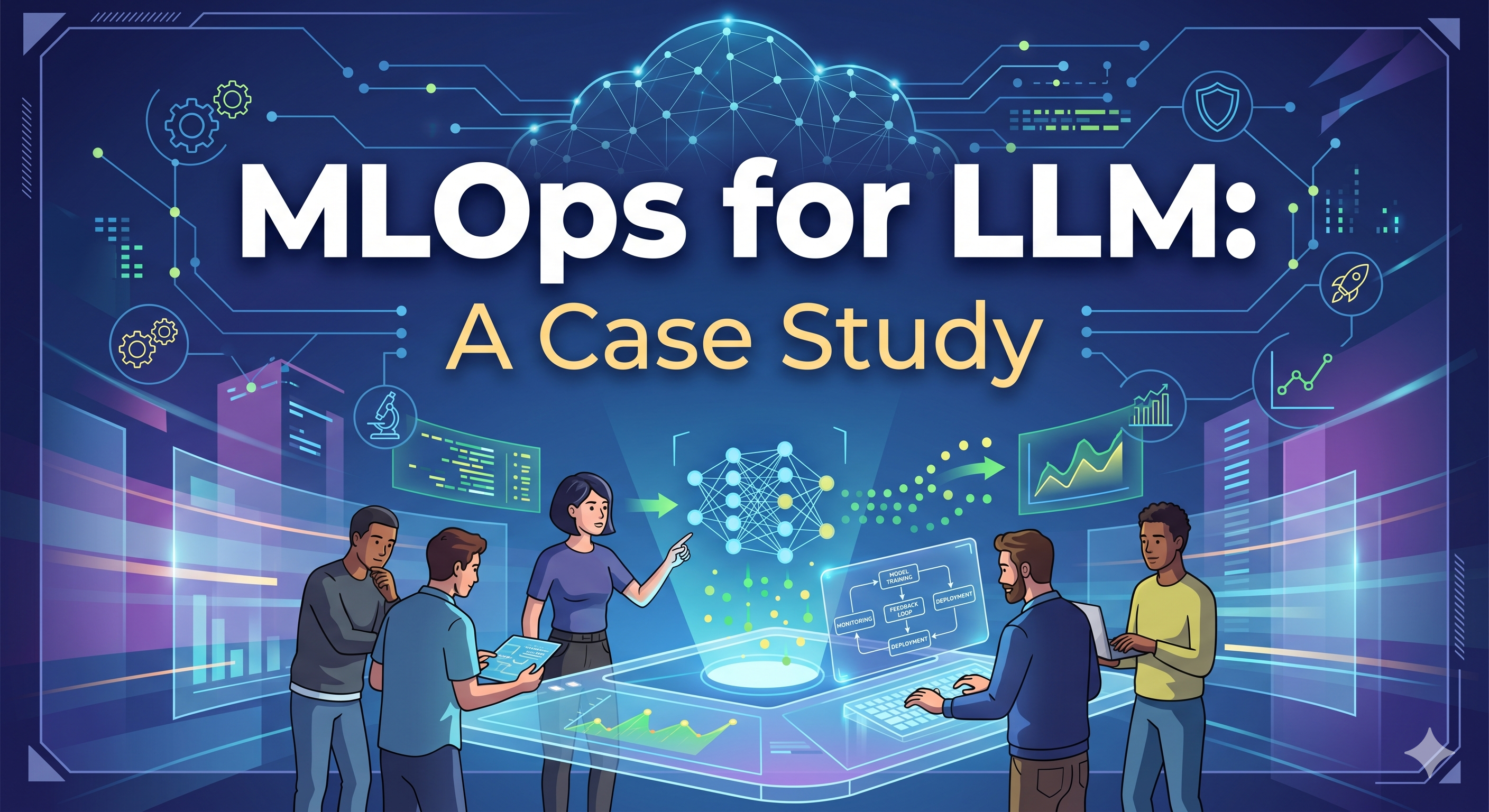
MLOps for LLM: A Case Study on Dresscode
A comprehensive walk-through of the 7-step production MLOps pipeline for multimodal LLM systems, featuring an architectural case study on Dresscode.
Run NextJS App in Shared-Hosting cPanel Domain
A step-by-step practical guide to configuring, optimizing, and deploying Next.js applications on shared-hosting cPanel domains with limited server resources.
Planen Sie einen produktionsreifen KI- oder LLM-Workflow?
Unsere Chefarchitekten unterstützen Sie beim Entwurf deterministischer, kosteneffizienter KI-Systeme.
Discovery-Call buchen